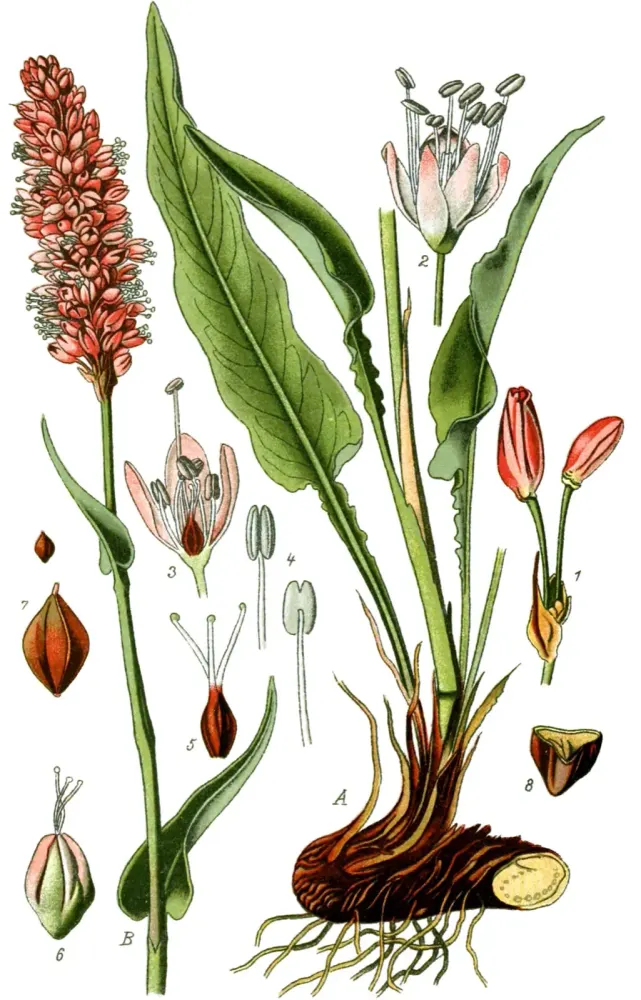
© Thomé, Otto Wilhelm; · Public domain · Commons
Bistorta officinalis
Schlangen-Knöterich · (Bistorta officinalis)
Knotweed family (Polygonaceae)
Description
Bistorta officinalis, known as bistort, common bistort, European bistort, or meadow bistort, is a species of flowering plant in the dock family Polygonaceae native to Europe and northern and western Asia. Other common names include snakeroot, snake-root, snakeweed, and Easter-ledges.
- TeaRhizomeInternalTraditional use
Infusion or decoction of the dried rhizome is used traditionally for diarrhoea and dysentery. The rhizome contains 15–36 % tannins (mainly condensed proanthocyanidins and gallic acid derivatives) that constrict the intestinal mucosa and reduce fluid loss.
Preparation & dosage
Pour 250 ml of hot water over 2–4 g of dried, chopped rhizome, steep for 10 minutes, strain. 3 times daily, for up to 4 weeks.
- Dry amount
- 2–4 g
- Doses per day
- 3×
- Max duration
- 4 weeks
[#src_pfaf_bistorta] [#src_pubmed_pawlowska] [#src_wiki_en_bistorta]
- GargleRhizomeExternalFolk medicine
Gargling with a strong rhizome decoction for pharyngitis, stomatitis, and spongy gums. The high tannin content is anti-inflammatory and astringent on mucous membranes.
- CompressRhizomeExternalTraditional use
Compresses with rhizome decoction or extract were used in folk medicine for wounds, burns, skin infections, and inflammatory skin conditions. Laboratory studies (Pawłowska et al. 2020) confirm antibacterial activity against skin pathogens.
- CompressLeafExternalFolk medicine
Fresh or briefly warmed leaves were applied as a wound poultice on cuts and ulcers. Gallic acid and tannins in the leaves act locally astringent and antimicrobial.
- TeaRhizomeInternalFolk medicine
Rhizome tea was used in folk medicine for excessive menstrual bleeding. PFAF describes the rhizome as styptic and reports use for metrorrhagia.
- RawLeafInternalFolk medicine
Young leaves are a traditional vegetable in northern England ("Easter-ledge pudding") and can be used as salad or spinach substitute. Leaves contain vitamins A and C but are high in oxalic acid — eat raw only in small amounts.
- TinctureRhizomeInternalFolk medicine
Rhizome tincture is used in modern herbal medicine as a concentrated tannin preparation — internally for irritable bowel complaints and diarrhoea, externally for gargling in throat complaints.