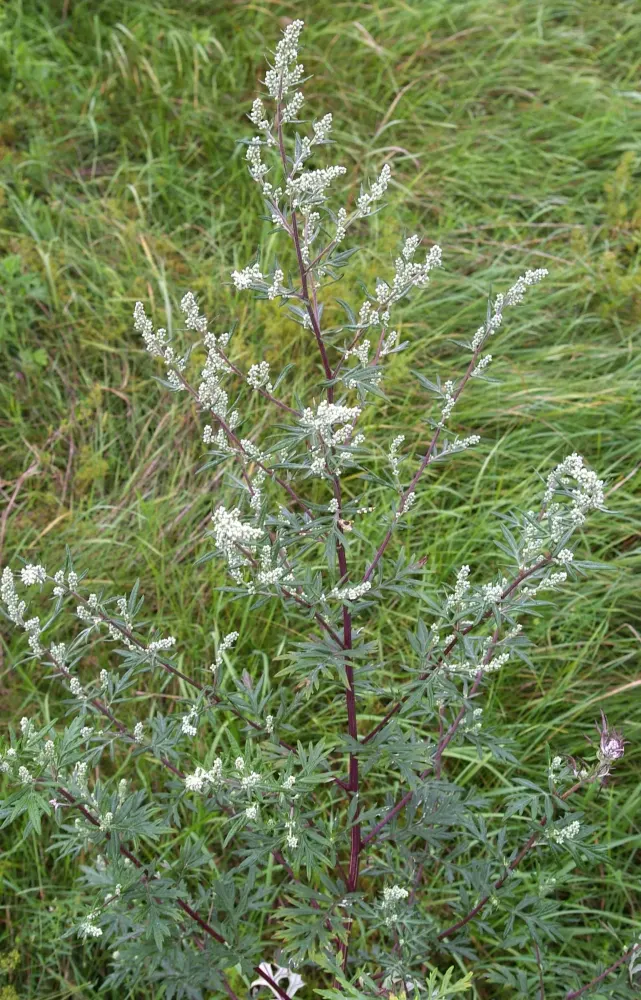
© Unknown (see Commons) · CC BY-SA 3.0 · Commons
Artemisia vulgaris
CautionBeifuß · (Artemisia vulgaris)
Daisy family (Asteraceae)
Description
Artemisia vulgaris, commonly known as mugwort, common mugwort, or wormwood, is a species of flowering plant in the daisy family Asteraceae. It is one of several species in the genus Artemisia commonly known as mugwort, although Artemisia vulgaris is the species most often called mugwort. Mugworts have been used medicinally and as culinary herbs.
CONTRAINDICATED during pregnancy
Pronounced uterotonic effect; can trigger uterine contractions and induce miscarriage. Strictly avoid.
CONTRAINDICATED during breastfeeding
Insufficient data; contraindicated as a precaution due to thujone content in essential oil.
CONTRAINDICATED for children
Due to thujone content and potential neurotoxic effects, do not use in children under 12 years.
- TeaAerial partsInternalFolk medicine
Infusion of the flowering herb (1–2 g per cup) as a bitter tonic to stimulate digestive secretions for loss of appetite, flatulence, and dyspeptic complaints. Sesquiterpene lactones (vulgarin) and essential oils (1,8-cineole, camphor) are responsible for the bitter, carminative action.
Preparation & dosage
- Dry amount
- 1–2 g
- Doses per day
- 3×
- Max duration
- 4 weeks
[#src_wp_de_artemisia] [#src_pfaf_artemisia] [#src_pmc7583039]
- TeaAerial partsInternalFolk medicine
Traditionally used as an emmenagogue for irregular, absent, or painful menstruation (dysmenorrhoea, amenorrhoea). The flavonoids eriodictyol and apigenin possess weak oestrogenic activity and can stimulate uterine contractions — therefore strictly contraindicated in pregnancy.
Preparation & dosage
- Dry amount
- 1–2 g
- Doses per day
- 2×
- Max duration
- 2 weeks
- SpiceLeafInternalTraditional use
Dried or fresh leaves as a culinary herb with fatty meats (goose, duck), stuffings, and gruit ale. Essential oils stimulate fat digestion and bile secretion. Traditional culinary plant in Germany and Vietnam.
- CompressLeafExternalFolk medicine
Warm herb poultice from freshly crushed leaves or moist tea infusion for joint pain and menstrual cramps. Topical use avoids absorption of larger amounts of thujone.
- Essential oilAerial partsExternalTraditional use
In traditional Chinese medicine, dried leaves and stems are compressed into moxa sticks and burned for thermoacupuncture (moxibustion) to stimulate acupoints. This application must be strictly distinguished from internal use.
- TinctureAerial partsInternalFolk medicine
Alcoholic extract from flowering herb as a bitter tonic; more concentrated than tea infusion. Due to thujone content, use only in small doses (max. 2–4 ml/day) and not continuously.
- TeaAerial partsInternalFolk medicine
Used in folk medicine as an expectorant and antispasmodic for respiratory complaints and asthma. The essential oil with 1,8-cineole and anticholinergic properties show bronchodilatory effects (animal studies).