Donum ∞ Dei
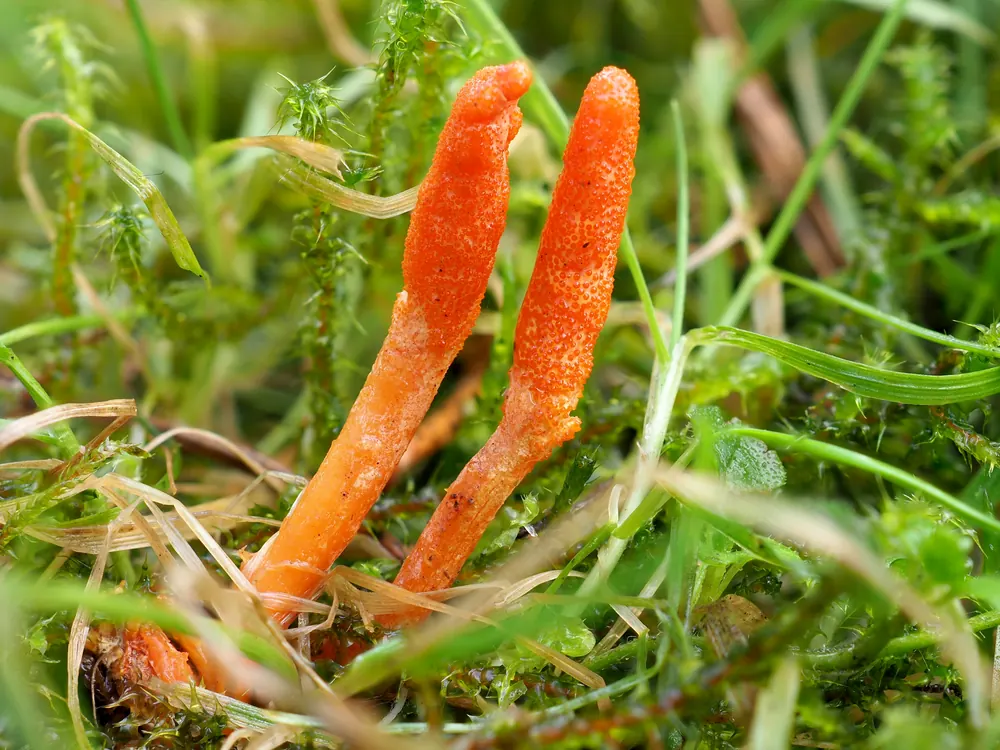
Orange-red, club-shaped fruiting bodies of Cordyceps militaris

© Lukas Large · CC BY-SA 2.0 · Commons

Scarlet caterpillarclub

Caution

Puppen-Kernkeule · (Cordyceps militaris)

Cordycipitaceae (Cordycipitaceae)

Description

Cordyceps militaris is an orange-red sac fungus of the Cordycipitaceae. It lives as a parasite: its spores infect moth pupae and caterpillars in the soil, grow through them and in late summer push the club-shaped fruiting bodies, one to five centimetres tall, out of the forest floor. Anyone who finds one and digs carefully will strike the filled pupal case beneath it. In Central Europe the species is rare and locally red-listed; material on the market comes almost entirely from cultivation on rice or insect substrate. It should not be confused with the Tibetan caterpillar fungus Ophiocordyceps sinensis, which is far more expensive and a different species. Its signature constituents include cordycepin, adenosine and polysaccharides. In traditional Chinese medicine the fungus is valued as a strengthening remedy and is now marketed as an adaptogen; many of the promoted effects have so far only been described in laboratory and animal studies. No serious side effects are known; caution applies with blood thinners.

  • TeaInternalTraditional use

    Traditionally used in Chinese medicine as a tonic for fatigue and cough and to support lung and kidney function. The customary preparation is a long simmer of the dried fruiting bodies, often together with other ingredients in a soup.

    Preparation & dosage

    Put about 3 g of dried fruiting bodies into 500 ml of water and simmer gently for 30 to 45 minutes. The brew is pale orange and tastes mildly mushroomy.

    Dry amount
    23 g
    Doses per day
    1×

    Sources: [1] [2]

  • TeaInternalClinical trial

    Marketed as an adaptogen claimed to improve stress resilience and reduce fatigue. Human exercise-performance studies are inconsistent and inconclusive; the constituent cordycepin has shown immunomodulatory effects in lab and animal studies without proven benefit in humans. What a given supplement actually contains varies considerably — many products consist of colonised grain substrate rather than fruiting bodies, with correspondingly less cordycepin.

    Sources: [1] [3]

  • RawInternalTraditional use

    Unlike the Tibetan caterpillar fungus, Cordyceps militaris can be cultivated — on cooked rice with added nutrients, in jars under light. That is exactly what turned it from a collector's find into a traded commodity and made research on it possible in the first place. The cultivated fruiting bodies are bright orange and are dried whole.

    Sources: [2]

DEENFRESBG